





Why Consistency Matters More Than Talent in Martial Arts
Natural ability may make an early exercise feel easier, but martial arts training continues beyond the first attempt. Familiarity, technique and understanding develop through repeated practice and feedback.
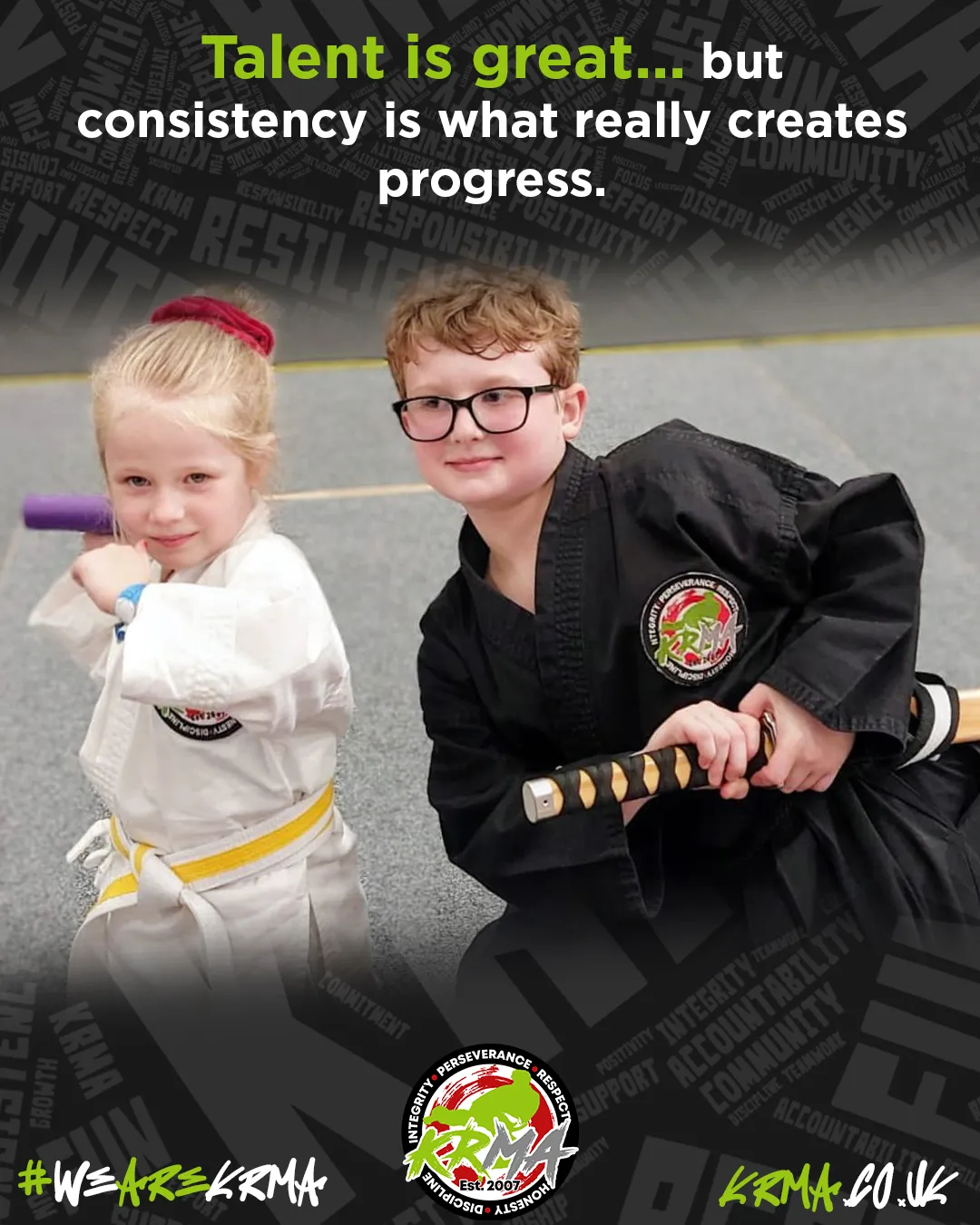
This article develops the theme of a KRMA post shared on 13 April 2026: talent can help, but consistency is what creates opportunities for continued progress.
Progress Is Usually Quiet
Not every useful session ends with a new technique or a noticeable breakthrough. Sometimes progress is a more stable stance, a better return to guard or remembering a sequence with less prompting.
Small improvements can be difficult to notice from one class to the next. Looking back over a longer period often gives a clearer picture than judging an entire training journey by the most recent session.
Repetition Builds Skill
Repeating an exercise gives you more opportunities to understand it. You can explore a correction, notice where a movement becomes awkward and ask your instructor what to focus on next.
Repetition is most useful when you pay attention to what you are practising. Repeating an error without feedback is different from working deliberately on a specific adjustment.
Regular attendance also gives instructors more opportunities to observe you. They can respond to the work they see, check how a correction is developing and help identify the next manageable step.
Consistency Does Not Mean Perfection
Missing an occasional session does not erase the work you have done. Illness, family commitments and other responsibilities can interrupt a routine.
The practical question is how to return to training when you can. A sustainable routine leaves room for real life; it does not depend on never missing a class or always feeling motivated.
Likewise, a difficult session is not proof that you have stopped progressing. Some exercises take longer to become familiar than others.
Stop Racing Other Students
Students arrive with different experience, abilities and opportunities to practise. Comparing your progress only with someone else’s can distract you from the work that would help you.
Choose something you can compare with your own earlier performance. Can you complete a sequence more accurately? Can you apply a correction with less prompting? What would your instructor like you to improve next?
Build a Training Habit You Can Sustain
A manageable routine is more useful than a short burst of training that you cannot maintain. Start with commitments that fit your circumstances, then review them with your instructor when necessary.
Choose a realistic training routine.
Give each session a small, specific focus.
Use instructor feedback to guide your practice.
Return after interruptions without treating them as failure.
Review your own progress over time.
Whether you practise Traditional Karate or another family martial arts programme, consistency means creating regular opportunities to learn. It does not require perfect attendance, constant motivation or faster progress than everyone else.