




Why Partner Training Matters in Martial Arts
Why Partner Training Matters in Martial Arts
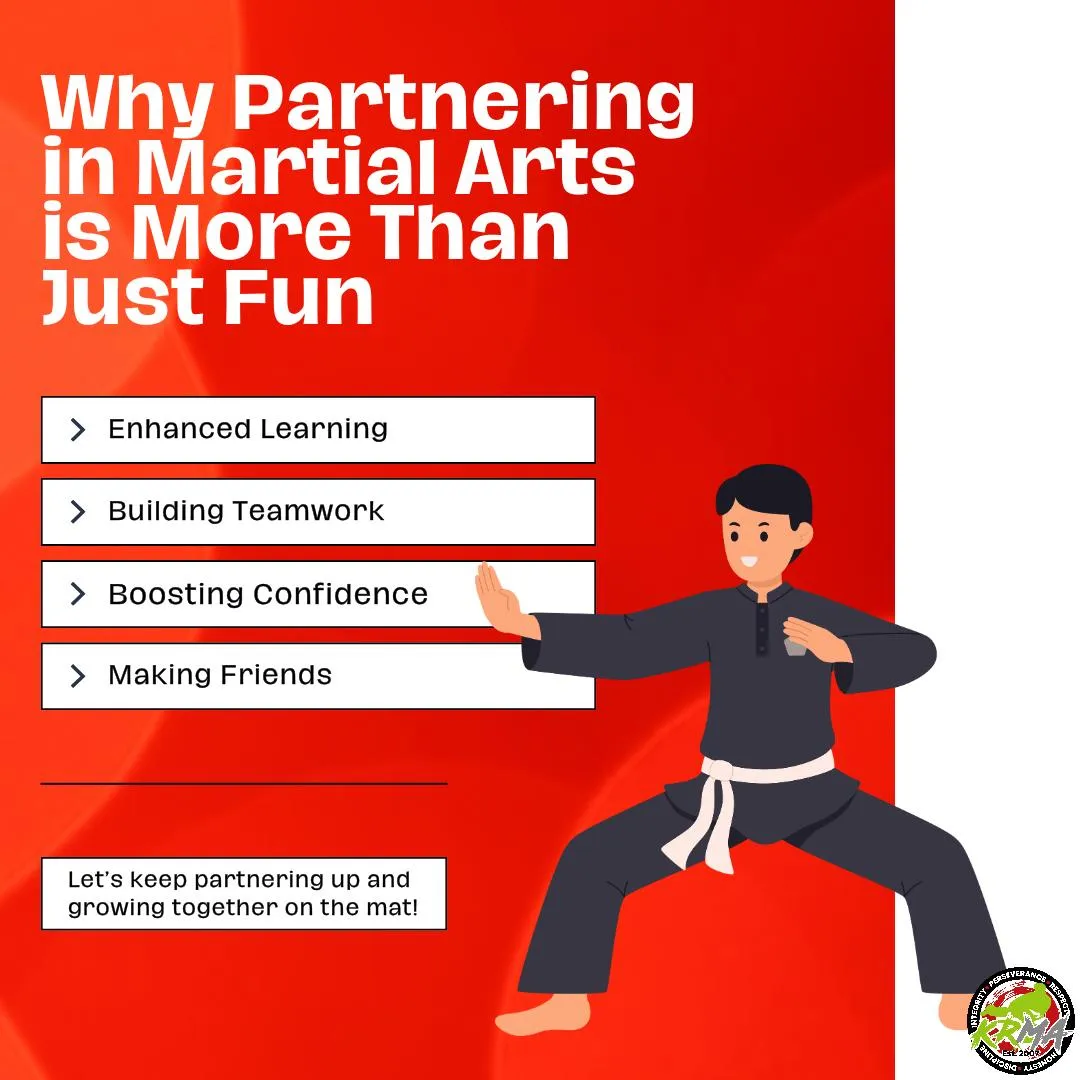
Martial arts includes individual practice, but learning with another person has an important place in training too. Partner drills give students opportunities to practise techniques, communicate and work together.
The value is in the shared practice: each person has a role in helping the other make the most of the exercise.
Putting Techniques Into Practice
A partner drill allows a student to practise a technique with another person. That can help them explore how an exercise works beyond performing the movement alone.
Working through a drill together can support understanding and execution. It also gives students opportunities to repeat an exercise and become more familiar with what they are practising.
Learning to Work With Different Partners
Training with peers brings a shared responsibility to the exercise. Both people need to understand their part and cooperate so that each has an opportunity to practise.
Working with different partners can also give students a chance to get to know other people in class. The exercise becomes an opportunity to learn together as well as to work on a technique.
Communication and Teamwork
Partner work depends on communication. Listening, checking that both people understand the exercise and taking turns all contribute to useful practice.
These are practical opportunities for teamwork. The aim is to help one another complete the drill, with attention to both people’s learning.
Building Confidence Through Practice
Practising with a peer can give a student another setting in which to attempt a skill. Repetition, cooperation and increasing familiarity may help them become more comfortable taking part.
That experience will differ between students. Partner training offers opportunities to develop confidence; it does not guarantee a particular outcome.
Creating a Stronger Training Community
Partner drills can help students interact with people they might otherwise know only as faces across the room. Sharing an exercise creates a reason to speak, cooperate and recognise one another’s efforts.
Alongside individual practice, partner training can therefore contribute to the sense of community within a martial arts class. Students work on their own development while also helping someone else practise.